A dressage rider may perform confidently during training.
The horse feels responsive, the movements flow and the rider knows the test. Yet when they enter the competition arena, everything changes.
The rider may become tense, forget the test, interfere with natural movements or become preoccupied with the judge. Some ride cautiously to avoid mistakes; others control every stride and lose their earlier connection.
Dressage demands precision and responsiveness while every movement is being observed and assessed.
Call +44 07807 540142 or email me
Book Your Session
Ask a Question
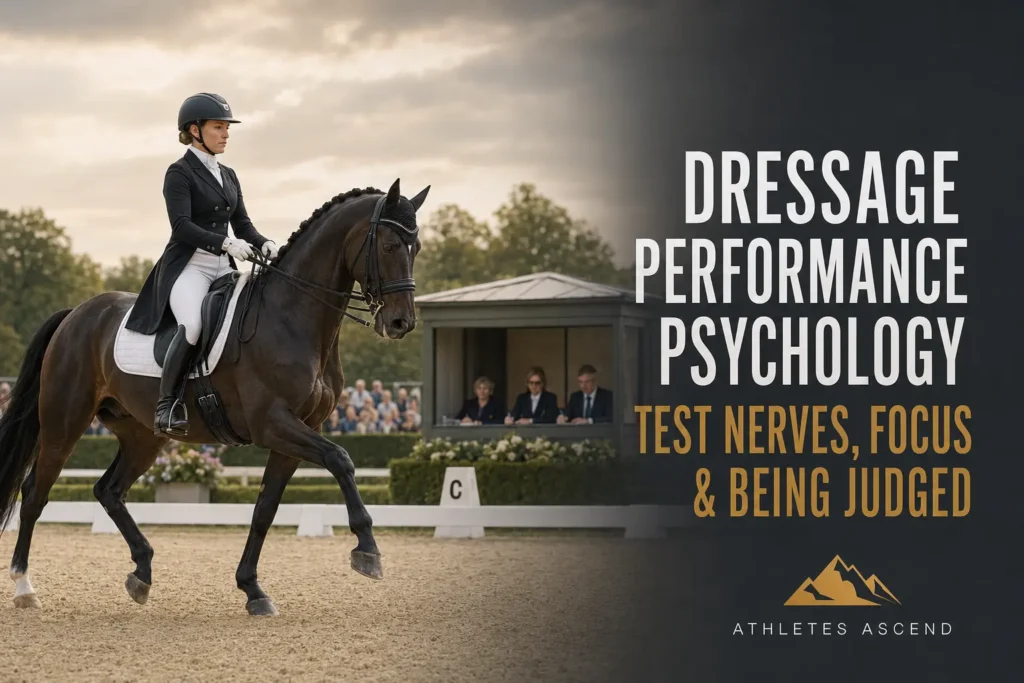
Why Dressage Can Feel So Pressured
In training, a movement can be repeated or adjusted. During a test, the rider has one opportunity to perform it at the required marker.
Pressure may come from:
- Remembering a previous disappointing score.
- Worrying about forgetting the test.
- Feeling watched by judges, spectators or other riders.
- Comparing yourself with more experienced competitors.
- Wanting to justify the time and money invested.
- Trying to achieve a qualifying score or move up a level.
- Worrying that your tension will affect the horse.
- Feeling that one mistake will spoil the entire test.
Sometimes careful preparation makes competition feel like an examination that must be passed perfectly.
This can contribute to performance anxiety in sport.
Fear of Being Judged
Dressage is unusual because judgement is built directly into the competition.
The rider knows someone is assigning marks to the quality, accuracy and presentation of every movement.
Attention may shift away from communicating with the horse and towards imagined evaluation:
What will the judge think of me?
Everyone can see that went wrong.
I do not belong at this level.
The rider may start avoiding criticism rather than producing the best available test. This links with fear of failure in sport and can make a capable competitor hesitant.
The score matters, but imagining the judge’s opinion during the test does not improve it.
When the Rider’s Tension Affects the Horse
Horses may respond to changes in balance, contact, breathing and tension. An anxious rider may hold tightly or use less consistent aids.
The horse may become less responsive. The rider interprets this as confirmation that the test is going wrong, creating further tension.
Not every difficulty is psychological. Training, pain, fitness, equipment, environment and horse welfare all require appropriate consideration.
The horse-rider relationship is a partnership, not a machine being operated by positive thinking.
Remembering the Test Without Mentally Rushing Ahead
Some riders worry about forgetting the test and mentally race several movements ahead. Attention leaves the horse and present task, increasing the chance of an error.
Effective concentration in sport is selective. The rider needs enough awareness of what comes next without abandoning what is happening now.
This balance can be practised using clear markers and attentional cues that return the rider to the current movement.
Recovering After a Mistake
A small error does not have to destroy the rest of the test.
However, riders may keep replaying it and conclude they have ruined the score. The body remains in the arena, but attention has returned to the mistake.
Learning to recover after mistakes means acknowledging what happened and returning to the next movement. The previous mark cannot change, but the remaining marks are undecided.
From Overcontrol to Clear Communication
Under pressure, the rider may consciously supervise their position, aids, rhythm and the horse’s response. This overthinking in sport can interfere with trained skills. The aim is to separate useful direction from anxious interference.
Developing trust in your training allows preparation to guide the performance without turning the test into a constant technical inspection.
How Sports Mindset Coaching May Help
Mindset coaching may help when nerves, judgement and conscious interference prevent a rider from reproducing their training in competition.
Work may include:
- Identifying what changes between training and competition.
- Preparing for entering the arena and beginning the test.
- Reducing fear attached to scores and judges’ comments.
- Developing clear attentional cues.
- Responding more effectively after an error.
- Rebuilding sports confidence through realistic evidence.
Inner Voice Awareness™ may help riders notice when useful instructions become criticism or competing demands.
Flow State Activation™ may support greater presence, connection and responsiveness. Where appropriate, NLP and hypnotherapy for sports performance may form part of the individual approach.
Mindset coaching does not replace qualified dressage instruction, veterinary assessment, appropriate equipment or physical rehabilitation.
Coach’s Insight
The rider often asks:
How can I make sure I perform the perfect test?
A more useful question may be:
How can I stay connected and ride the test that is available today?
Perfection creates supervision. Connection creates responsiveness.
Frequently Asked Questions
Why do I ride better at home than in a dressage test?
Training usually contains less judgement and consequence. Competition can alter attention, breathing, tension and communication with the horse.
How can I stop worrying about the dressage judge?
You cannot remove the judge from dressage, but you can practise returning attention to your riding, the horse and the current movement instead of imagining the judge’s reaction.
What if one mistake ruins my confidence?
One movement does not determine the whole test. Developing a reliable reset can help you return attention to the marks still available.
Riding the Test Rather Than the Score
Dressage requires preparation and accuracy, but also enough psychological freedom to communicate naturally with the horse.
The wider process may connect with equestrian performance psychology, rebuilding horse-riding confidence after a fall or developing showjumping confidence.
The rider cannot control every mark. They can prepare carefully, ride the movement ahead and remain part of the partnership rather than becoming an anxious spectator.
Call +44 07807 540142 or email me