Sport is emotional.
Winning brings excitement.
Losing brings disappointment.
Mistakes create frustration.
Success creates confidence.
Pressure creates nerves.
The question isn’t whether athletes experience emotions.
Everyone does.
The real question is whether those emotions begin controlling performance.
Athletes with strong emotional control aren’t emotionless. They simply recognise what they’re feeling without allowing those feelings to dictate their decisions, behaviour or performance.
Learning this skill is one of the biggest advantages any athlete can develop.
Call +44 07807 540142 or email me
Book Your Session
Ask a Question
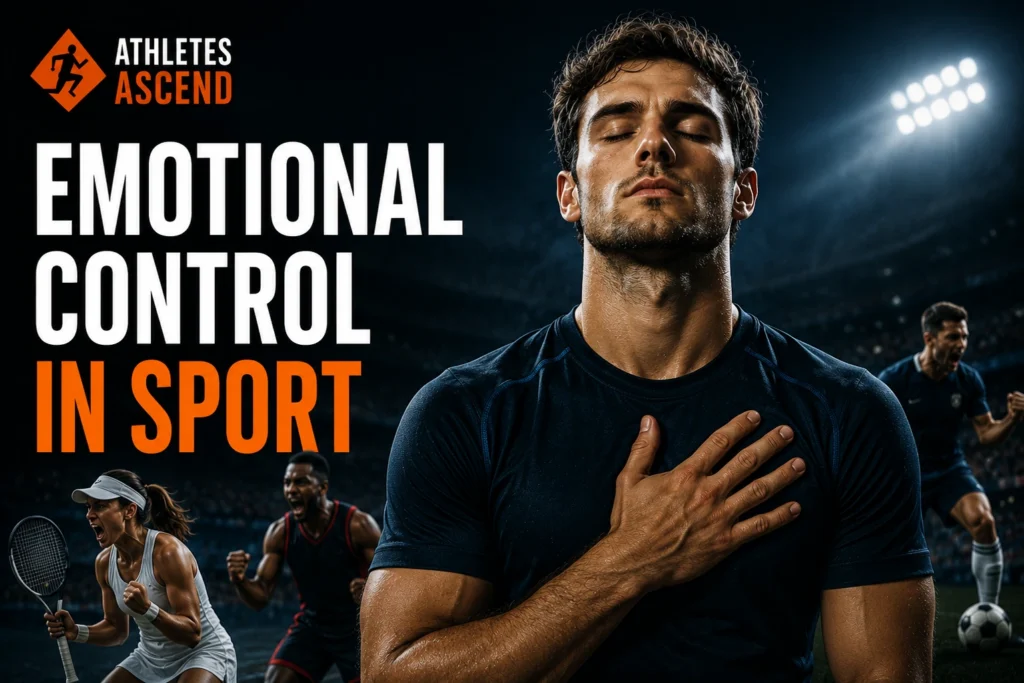
What Is Emotional Control?
Emotional control is the ability to recognise, understand and regulate your emotions during training and competition.
It doesn’t mean suppressing emotions.
It means responding to them effectively.
Athletes with good emotional control can:
- Recover quickly after mistakes.
- Stay calm under pressure.
- Make better decisions.
- Maintain concentration.
- Perform consistently.
- Performance anxiety.
- Avoid emotional overreactions.
- Continue competing despite frustration.
The emotion may still be there.
It simply no longer controls performance.
Why Emotions Affect Performance
Every emotion influences attention.
When athletes become overwhelmed by anger, fear or frustration, attention often shifts away from the task.
Instead of focusing on the next action, they begin thinking about:
- The mistake they just made.
- The referee’s decision.
- Their opponent.
- The crowd.
- What might happen next.
This reduces focus and often leads to poorer decisions and choking under pressure.
Learning to regulate emotions allows attention to return where it belongs.
Emotional Control Isn’t About Being Calm All the Time
Many athletes believe they must feel calm before they can perform well.
That’s not true.
Some athletes perform brilliantly while feeling excited.
Others compete well with high levels of intensity.
The objective isn’t to remove emotion.
It’s to ensure emotion supports rather than disrupts performance.
Controlled intensity often produces outstanding performances.
Uncontrolled emotion rarely does.
Recovering After Emotional Moments
Every athlete experiences emotional moments.
The important skill is recovery.
Successful athletes learn to:
- Notice their emotional response.
- Accept it without judgement.
- Reset quickly.
- Refocus attention.
- Commit to the next action.
The faster this recovery happens, the less influence one emotional moment has over the rest of the competition
Emotional Control and Self-Awareness
Before athletes can regulate emotions, they first need to notice them.
Self-awareness is the foundation of emotional control.
At Athletes Ascend, this connects closely with Inner Voice Awareness.
By recognising internal thoughts, emotional reactions and behavioural patterns, athletes become better able to choose their response rather than simply reacting automatically.
Awareness creates choice.
Choice creates control.
Emotional Control Insight
You can’t always choose your first emotion.
You can usually choose your next response.
Coach’s Observation
The athletes who appear mentally strongest aren’t those who never become emotional.
They’re the ones who recover the quickest.
A mistake may last one second.
The emotional reaction can last an entire match—unless you learn how to reset.
How Sports Mindset Coaching Can Help
Emotional control is a skill that can be developed.
Sports mindset coaching helps athletes improve self-awareness, strengthen emotional regulation, dealing with competition nerves, with mental consistency, to develop effective reset routines and respond more constructively to pressure, mistakes and setbacks.
The aim isn’t to remove emotion. It’s to have flow state.
It’s to use emotion intelligently and mindful.
Frequently Asked Questions
Why is emotional control important in sport?
Emotional control helps athletes make better decisions, maintain focus, recover after mistakes and perform more consistently under pressure.
Is emotional control the same as hiding emotions?
No. Emotional control involves recognising and regulating emotions rather than suppressing or ignoring them.
Can emotions improve performance?
Yes. Excitement, determination and controlled intensity can all enhance performance when managed effectively.
Can emotional control be trained?
Absolutely. Like physical skills, emotional regulation improves through awareness, practice and consistent application. This can even help with panic attacks.
Can sports mindset coaching help?
Yes. Athletes can develop practical strategies that improve emotional regulation, increase resilience and help them perform more consistently regardless of the pressure they face.
How I Work With Athletes
I combine practical sports mindset coaching with NLP, hypnotherapy where appropriate, and performance-psychology principles. The approach depends on the athlete, the sport and what is maintaining the problem. It complements technical coaching, medical care and rehabilitation rather than replacing them.
Master Your Response
You can’t control every situation.
You can’t control every result.
You can’t even control every emotion.
But you can learn to control how you respond.
At Athletes Ascend, we help athletes develop emotional control, strengthen resilience and build the mindset needed to perform with confidence, composure and consistency when it matters most.
Call +44 07807 540142 or email me