You know how to swim.
You may complete the required distance comfortably in a pool. Your fitness is good, your technique is functional and you have trained consistently.
Then you enter a lake, river or sea.
The water feels cold. You cannot see the bottom. There are no lane ropes or walls. Other swimmers are close to you and your wetsuit feels tighter than it did on dry land.
Your breathing changes. Your chest tightens. Your heart races and one thought takes over:
I need to get out.
Open-water swimming anxiety can affect beginners, experienced swimmers and competitive triathletes. It does not necessarily mean you lack fitness, courage or swimming ability.
However, open water involves genuine risks. Psychological support must work alongside appropriate swimming ability, safety procedures, event guidance and qualified open-water coaching.
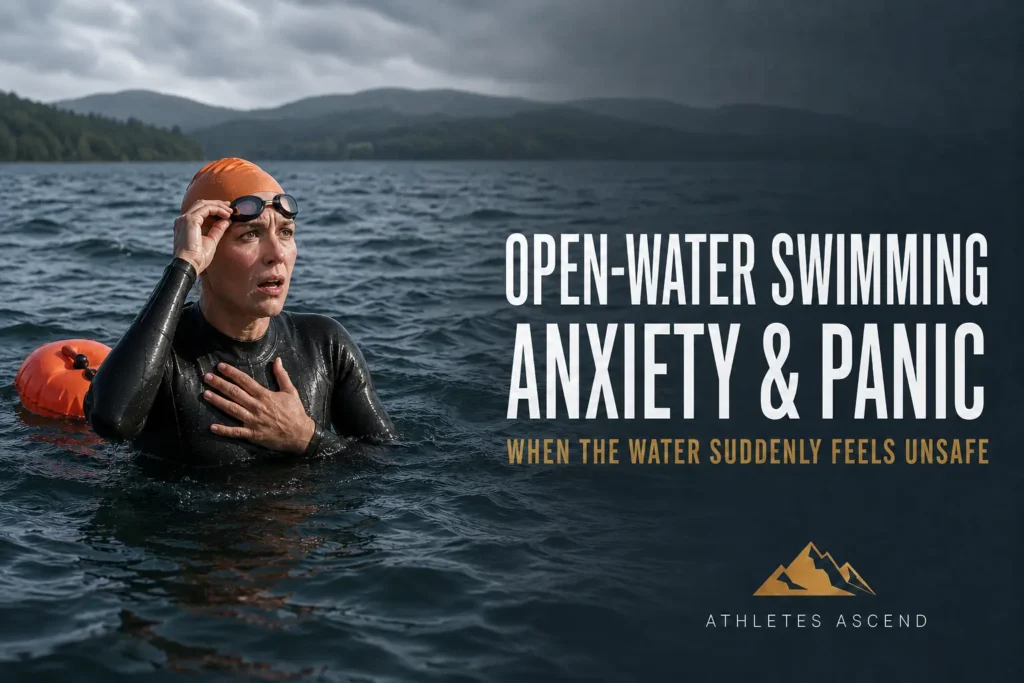
Why Can a Confident Pool Swimmer Panic in Open Water?
A swimming pool is relatively predictable.
You can see the bottom, judge the distance, follow a lane and stop at the wall. The water temperature and conditions are usually controlled.
Open water removes many of those reference points and adds different sensations:
- Cold water against the face and body.
- Reduced or zero visibility.
- Waves, chop or currents.
- Weeds, wildlife or unexpected contact.
- A wetsuit pressing against the chest or neck.
- Difficulty swimming in a straight line.
- Physical contact during a mass start.
- No obvious place to stop or hold.
- Greater uncertainty about distance and direction.
The mind may interpret these sensations as evidence that something is wrong. Breathing becomes faster, muscles tighten and the swimmer begins fighting the water.
This can create a cycle similar to panic attacks in sport:
- An unfamiliar sensation is noticed.
- The swimmer interprets it as dangerous.
- Breathing and heart rate increase.
- Swimming becomes less comfortable.
- The physical changes appear to confirm the danger.
- Anxiety develops into panic.
What Does Open-Water Swimming Panic Feel Like?
The experience differs between swimmers, but common signs include:
- Feeling unable to get a full breath.
- Gasping or breathing too rapidly.
- Tightness across the chest.
- Dizziness or disorientation.
- Feeling trapped inside a wetsuit.
- Becoming frightened when putting the face into the water.
- Being unable to establish a normal stroke.
- Looking repeatedly for an exit, kayak or safety boat.
- Feeling certain that you are about to sink.
- Panicking when surrounded by other swimmers.
- Swimming comfortably in training but struggling during an event.
- Avoiding open water after one frightening experience.
A swimmer may become anxious before reaching the venue. This anticipatory response can develop into performance anxiety in sport, particularly when the swim is part of an important triathlon.
Why Open-Water Anxiety Is So Relevant to Triathlon
For many triathletes, the swim is the shortest part of the event but the greatest psychological barrier.
You may have trained for months, paid the entry fee and prepared carefully for the bike and run. Yet the whole event depends on completing the water first.
This creates considerable pressure:
What if I panic and all that training is wasted?
The start can intensify the problem. Noise, cold water, physical contact and an elevated heart rate arrive at the same moment. A triathlete may also start too quickly because they fear being left behind, increasing the demand for oxygen before a comfortable breathing rhythm has been established.
This is why open-water swimming anxiety deserves its own preparation rather than being treated as ordinary competition nerves.
Experienced Athletes Can Experience Open-Water Panic
Open-water panic does not only happen to weak swimmers.
Age-group triathlete Adam Goulet had competed for several years without open-water anxiety. During one cold race, exhaust fumes from a nearby support boat contributed to breathing difficulties and triggered a severe panic response. He left the water and could not finish the race.
Goulet later returned to competition and won multiple age-group national championships. He described using mindfulness before races, planning how he would respond if anxiety appeared, choosing suitable events, gaining more open-water experience and beginning the swim at a controlled pace. His full account can be read in this FORM interview about overcoming open-water swimming anxiety.
Open-water champion and experienced coach Gerry Rodrigues has also described feeling overwhelmed in extremely cold races, including chest tightness, breathlessness and the belief that he might die. His experience demonstrates that expertise does not make someone immune to a powerful physical alarm response.
Rodrigues emphasises preparation: appropriate open-water experience, cold-water acclimatisation, practising with the intended wetsuit and never swimming alone. These safety principles are consistent with the guidance available through British Triathlon.
How Have Other Swimmers Rebuilt Confidence?
Triathletes Chrysta Castaneda, Jeff Genecov and Chris Doerbeck have also publicly discussed their different experiences of open-water fear.
Their progress did not come from one identical technique.
Chrysta recognised that much of her fear concerned fatigue and having nothing to hold. Giving herself permission to roll onto her back, tread water and recover reduced the feeling that she had no options.
Chris identified interrupted breathing, limited visibility, sighting difficulties and dizziness as important triggers. He changed his attentional priority: breathing rhythm came before swimming pace. He also worked on technique and learned to recognise the early signs of panic.
Jeff found breathing exercises and meditation useful, but also stressed practising in suitable conditions, swimming with other people and using properly supervised sessions.
Their experiences reveal an important principle:
Confidence improves when the swimmer understands the specific problem and develops credible ways of responding to it.
That is more useful than repeatedly telling yourself to calm down.
What Is the Fear Actually Responding To?
“I am frightened of open water” may contain several different fears.
You may be afraid of:
- Drowning or becoming exhausted.
- Being unable to see beneath you.
- Cold-water shock.
- Being kicked or swum over.
- Losing direction.
- Experiencing another panic attack.
- Looking embarrassed in front of other competitors.
- Being unable to complete the triathlon.
- Letting down a coach, team or family member.
- Discovering that your training has not prepared you.
Identifying the actual trigger helps separate psychological anticipation from practical issues requiring attention.
For example, poor wetsuit fit needs equipment advice. Inadequate sighting needs swimming instruction. Insufficient fitness needs appropriate training. Severe or unusual physical symptoms may need medical assessment.
Mindset coaching should not relabel every legitimate concern as anxiety.
Rebuilding Confidence Through Appropriate Experience
Avoiding open water may produce immediate relief, but it can also teach the mind:
I was safe because I escaped.
The alternative is not to force yourself into deep, cold or crowded water.
Confidence is normally rebuilt through progressive, properly supervised experiences. With a qualified open-water coach, this might begin in safe, controlled conditions and gradually introduce depth, reduced visibility, a wetsuit, other swimmers and race-related demands.
The psychological principle is to create meaningful evidence without overwhelming the swimmer.
This is part of rebuilding sports confidence. Confidence does not mean believing that nothing difficult will happen. It means trusting that you can notice what is happening, make an appropriate decision and use the support available.
Breathing, Attention and the Fear of Losing Control
When swimmers become anxious, they often monitor every breath:
- Am I getting enough air?
- Why is my chest tight?
- What if I cannot breathe?
- Is the wetsuit restricting me?
- Am I about to panic?
This internal supervision can become overthinking in sport.
Breathing also has a practical relationship with pace and technique. Starting too quickly can raise oxygen demand before rhythm has been established. Cold water can produce an involuntary gasp response. Waves may interrupt an expected breath.
A qualified swimming coach can assess the technical and environmental factors. Mindset work can help the swimmer respond without immediately treating every uncomfortable sensation as catastrophe.
Useful focus in sport may involve returning attention to one manageable action: the exhalation, stroke rhythm, the next buoy or the space immediately ahead.
The aim is not perfect calm. It is enough stability to assess the situation safely.
Preparing a Mental Response Plan
A swimmer may spend weeks imagining panic without deciding what they would actually do.
A mental response plan could explore questions such as:
- What usually triggers the first change?
- How will I recognise the early signs?
- Where can I move if the start becomes crowded?
- What safety support is available?
- What instruction has the event given swimmers in difficulty?
- Can I reduce my pace before panic escalates?
- What short attentional cue helps me return to the present?
- Under what circumstances should I stop and seek assistance?
Planning should be completed alongside the event’s rules and qualified swimming guidance.
Knowing that you have choices can reduce the feeling of entrapment. That supports greater emotional control in sport without creating false confidence.
Changing the Inner Conversation
After one frightening swim, the mind may begin predicting:
It will happen again.
I will not be able to breathe.
I am going to ruin the event.
The objective is not to replace those thoughts with unrealistic promises.
More useful self-talk in sport may be specific:
Start at my pace.
Establish the breath before increasing effort.
I can notice the first signs and respond early.
I will use the event’s safety support if I need it.
Developing Inner Voice Awareness™ can help identify whether your internal language is preparing you or repeatedly rehearsing an emergency.
Some swimmers use words. Others respond better to rhythm, sensation, movement or an external point of attention. Coaching should reflect how the individual naturally processes information.
How Sports Mindset Coaching May Help
Sports mindset coaching may help when fear, anticipation and previous panic continue after appropriate swimming preparation.
Work may include:
- Identifying the exact trigger for anxiety.
- Understanding the swimmer’s interpretation of physical sensations.
- Reducing catastrophic anticipation.
- Developing a clear pre-swim attentional plan.
- Creating useful and believable internal cues.
- Preparing psychologically for a mass start.
- Rebuilding confidence through progressive evidence.
- Responding differently to memories of a previous panic episode.
- Transferring confidence from training into competition.
Mindset work may incorporate NLP, hypnotherapy where appropriate and practical performance coaching. This complements open-water instruction, event safety, medical guidance and triathlon coaching; it does not replace them.
The aim is to help the swimmer trust their training while remaining responsive to genuine safety information.
Safety Must Come Before Performance
Never swim alone in open water.
Use recognised venues, follow local and event-specific guidance, check weather and water conditions, wear appropriate equipment and swim within your current ability. Where possible, use supervised sessions with qualified coaches and safety personnel.
Stop and seek assistance if you experience unusual chest pain, faintness, severe breathing difficulty, confusion or symptoms that may be medical rather than psychological.
If panic attacks also occur away from swimming, significantly affect everyday life or are connected with trauma, seek help from an appropriately qualified mental-health professional.
No race result is more important than getting out of the water safely.
Coach’s Insight
The swimmer often asks:
How can I guarantee that I will not panic?
That guarantee is not available.
A more useful question is:
How can I prepare properly, recognise what is happening and respond before fear takes control?
Confidence does not come from pretending that open water is a swimming pool.
It comes from developing the physical skills, practical preparation and psychological flexibility required for the environment you are actually entering.
Frequently Asked Questions
Why do I panic in open water when I can swim in a pool?
Open water removes visual and physical reference points while adding cold, restricted visibility, waves, other swimmers and uncertainty. Your swimming ability may be unchanged, but the environment creates a different response.
Is open-water swimming anxiety common in triathlon?
Yes. It affects beginners and experienced triathletes. The combination of cold water, a racing start, physical contact and pressure to complete the event can intensify anxiety.
Can a wetsuit cause panic?
An unfamiliar or poorly fitted wetsuit may contribute to tightness or a sense of restriction. Wetsuit fit and safe use should be addressed with an appropriate swimming or equipment professional.
Should I practise open-water swimming before my triathlon?
Yes. Pool fitness alone does not reproduce visibility, temperature, sighting, waves or other swimmers. Open-water practice should take place safely, with appropriate supervision and never alone.
Can mindset coaching stop panic attacks?
No responsible coach should guarantee that panic will never occur. Coaching may help you understand triggers, change anticipatory patterns and develop a more constructive response.
What if I panic during a race?
Follow the event’s safety instructions, reduce effort if appropriate and signal for assistance when needed. Do not continue merely because you are worried about your result or what other people will think.
Do I have to visualise the swim?
No. Preparation can use language, physical rehearsal, external cues, rhythm, written planning and supervised experience. It should be adapted to how you naturally think.
Returning to Open Water With Greater Confidence
Open-water swimming anxiety can make a capable swimmer question their ability.
The problem may begin with cold, poor visibility, physical contact, breathing disruption or one frightening experience. The fear then continues because the swimmer anticipates panic before entering the water.
Progress starts by identifying what is genuinely technical, environmental, physical and psychological.
With appropriate safety procedures, qualified swimming support and individual mindset work, you can begin changing the relationship with open water.
You do not need to prove that you are fearless.
You need to prepare responsibly, remain present and know that you can respond to the water and situation in front of you.